
Red oak or white oak — what actually differs
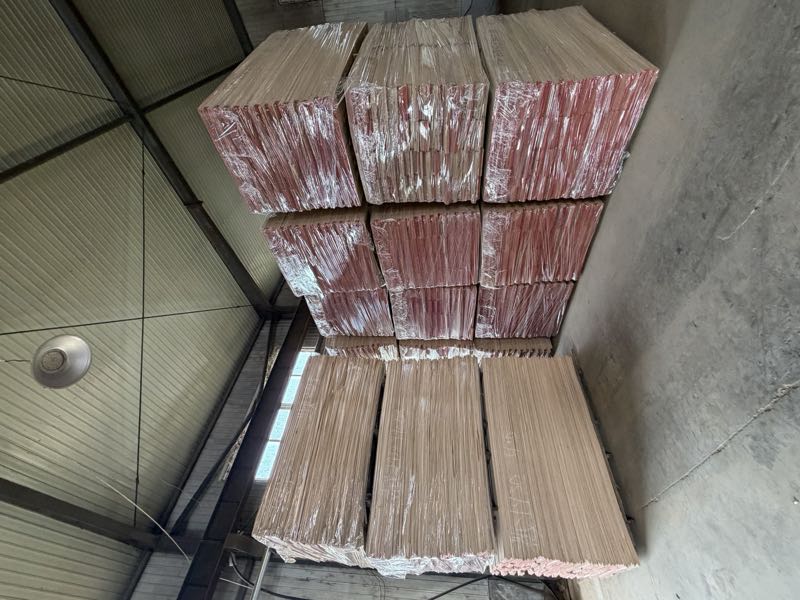
The question we are asked most: both are oak, so what is the difference and which should I use? Five dimensions that matter when you select material.
Colour
Red oak runs pale red to pinkish brown; southern material is redder with more variation, northern material paler and more even. White oak is greyish white to light brown, a cooler tone with less variation. Dark and distressed finishes gain depth on red oak; natural and pale finishes yield better on white oak.
Grain
Red oak has a bold, open cathedral grain. White oak is finer and straighter, and quarter-sawn faces show pronounced ray fleck, which is sought after for high-end panels.
Density and hardness
White oak is heavier and harder: at 12% MC red oak is about 705 kg/m³ with hardness near 5,738 N; white oak about 769 kg/m³ and 6,049 N. For tops and treads, white oak wears better.
Pore structure
The fundamental difference: white oak pores are blocked by tyloses and are effectively watertight — which is why it was used for barrels. Red oak pores are open and take up water and stain faster. For damp or exterior positions, choose white oak.
Shrinkage
White oak shrinks more in volume (about 12.6%) than red oak (about 10.8%), so it reacts more to moisture swings. We hold a tighter moisture band on white oak lamella before it ships.